
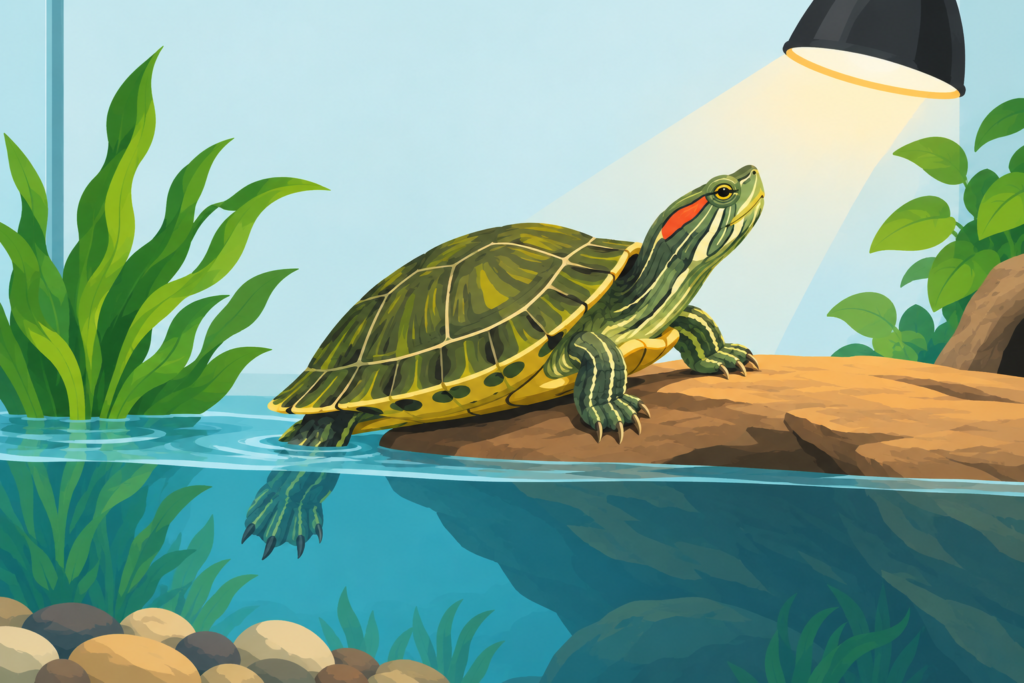
Red Ear Sliders (Trachemys scripta elegans) are one of the most popular pet turtles in the world — and for good reason. They’re active, personable, and can live for decades with the right setup. But they’re also one of the most commonly neglected pets, mainly because people underestimate how much space, filtration, and lighting they actually need as adults.
This guide covers everything you need to know, from setting up your first tank to spotting early signs of illness.
1. Quick Facts
| Adult size | Females: 8–12 inches. Males: 5–9 inches |
| Lifespan | 20–30 years with proper care |
| Diet | Omnivore — pellets, greens, occasional protein |
| Minimum tank size (1 adult) | 40 gallons |
| Water temperature | 75–78°F (24–26°C) |
| Basking temperature | 85–90°F (29–32°C) |
| UVB requirement | Yes, essential |
| Experience level | Beginner-friendly, but space-demanding |
2. Setting Up the Tank
Tank size
This is the single most common mistake new owners make. A Red Ear Slider bought as a hatchling the size of a coin will grow to 8–12 inches within a few years. Plan for adult size from day one where possible:
- 1 juvenile turtle: 20–29 gallons (temporary — you’ll need to upgrade)
- 1 adult turtle: minimum 40 gallons, ideally 55–75 gallons
- 2 adult turtles (pair): 75–100+ gallons
A simple rule of thumb: 10 gallons of water per inch of shell length, and more if you’re keeping multiple turtles.
Water depth
Water should be deep enough for the turtle to swim and fully submerge — generally at least 1.5–2x the turtle’s shell length. Shallow water restricts natural swimming behavior and can contribute to stress.
Basking area
Every enclosure needs a dry basking spot the turtle can fully climb out onto. Options include:
- Commercial floating basking docks
- Half-log or ramp-style basking platforms
- DIY platforms using aquarium-safe materials (avoid sharp edges or materials that trap moisture and grow mold)
The basking area should be large enough for the turtle to fully leave the water and turn around comfortably.
3. Filtration and Water Quality
Red Ear Sliders are messy eaters and produce a lot of waste — strong filtration isn’t optional.
- Use a filter rated for 2–3x your tank’s actual volume. A filter rated “for 40 gallons” on a 40-gallon turtle tank will be undersized because of the bioload.
- Canister filters generally outperform hang-on-back filters for turtle tanks.
- Partial water changes (20–30%) every 1–2 weeks are still necessary even with good filtration.
- Ammonia, nitrite, and nitrate should be tested periodically, especially in the first few months of a new setup.
Cloudy or smelly water is a sign your filtration or water-change schedule needs adjusting — it’s not something to ignore, as poor water quality is a leading cause of shell and skin infections.
4. Lighting and Temperature
UVB lighting
UVB is essential, not optional. Without it, turtles cannot properly metabolize calcium, which leads to metabolic bone disease — a serious and painful condition.
- Use a 5.0–10.0 UVB bulb positioned above the basking area, without glass or plastic blocking the rays (UVB cannot pass through most glass or plastic).
- Replace UVB bulbs every 6–12 months, even if the bulb still produces visible light — UVB output degrades well before the bulb burns out.
- Keep the bulb at the manufacturer-recommended distance from the basking spot (usually 12–18 inches, but check your specific bulb).
Basking heat
A separate basking heat bulb keeps the dry area at 85–90°F. Use a thermometer at the basking spot to confirm the actual temperature — don’t guess based on bulb wattage alone.
Water temperature
Maintain 75–78°F using a submersible aquarium heater with a guard (turtles can crack unprotected heaters). Check temperature regularly with a reliable thermometer.
Day/night cycle
Provide roughly 10–12 hours of light per day using a timer, followed by a dark period at night. Turtles need this cycle for a healthy activity pattern.
5. Diet and Feeding
Red Ear Sliders are omnivores, and their diet shifts with age — juveniles eat more protein, adults shift toward more plant matter.
What to feed
- Commercial turtle pellets (high-quality, calcium-fortified) as a base diet
- Leafy greens: romaine lettuce, dandelion greens, water lettuce, duckweed
- Occasional protein: feeder fish, shrimp, bloodworms, earthworms
- Calcium supplementation: cuttlebone left in the tank helps with shell health
Feeding schedule
- Juveniles: small amounts daily
- Adults: every 1–2 days is usually sufficient — overfeeding adults is a common cause of obesity and poor water quality
What to avoid
- Bread, dairy, and processed human food
- Wild-caught insects or plants (pesticide risk)
- Overfeeding protein to adults (can contribute to shell pyramiding and organ strain)
Feed only what your turtle can finish in about 15 minutes to reduce uneaten food fouling the water.
6. Handling and Behavior
Red Ear Sliders are not big fans of frequent handling — they tolerate it, but excessive handling causes stress. General guidelines:
- Support the body fully with both hands; never pick up by the tail or a single leg
- Wash hands before and after handling (turtles can carry Salmonella — see health note below)
- Keep handling brief and infrequent, especially for younger or newly-acquired turtles still settling in
- Expect some hissing, retreating into the shell, or clawing initially — this is normal defensive behavior, not aggression
7. Common Health Issues to Watch For
| Symptom | Possible Cause |
|---|---|
| Soft or pitted shell | Metabolic bone disease (often UVB/calcium deficiency) |
| White or fuzzy patches on shell/skin | Fungal or bacterial infection, often linked to poor water quality |
| Swollen eyes, won’t open | Vitamin A deficiency or bacterial infection |
| Lethargy, not basking | Temperature too low, illness, or stress |
| Floating lopsided or unable to submerge | Respiratory infection (often from cold water or drafts) |
| Loss of appetite (short-term) | Can be normal during brumation season or shedding; prolonged loss of appetite needs vet attention |
If you notice any of these signs persisting more than a day or two, consult an exotic/reptile veterinarian — general vets aren’t always equipped for turtle-specific care.
A note on Salmonella: Like most reptiles, turtles can carry Salmonella naturally. This is manageable with basic hygiene (handwashing after handling or tank maintenance) and isn’t a reason to avoid turtles as pets — just a standard precaution, especially in households with young children, elderly, or immunocompromised individuals.
8. Growth and Long-Term Planning
- Red Ear Sliders grow fast in their first 2–3 years, then slow down as they approach adult size
- Plan for tank upgrades in advance rather than reactively — a turtle that outgrows its tank experiences more stress and worse water quality
- With a 20–30 year lifespan, this is a long-term commitment, not an impulse pet — worth factoring into the decision before bringing one home
9. Keeping a Pair or Group
If you’re keeping multiple turtles:
- Tank size needs to scale up significantly, not just slightly — see sizing table in Section 2
- Watch for basking-spot competition; provide multiple basking areas if keeping more than one turtle
- Mixed-sex pairs may show breeding behavior seasonally — this is natural, but be aware if you’re not prepared for eggs (females can lay infertile eggs even without a male present)
- Monitor for aggression, especially with mismatched sizes — a larger turtle can injure a smaller one
10. A Note on Legal Ownership
Red Ear Sliders are considered an invasive species in parts of the world due to past releases into non-native ecosystems. As a result, some regions restrict or regulate their sale and ownership. Before purchasing, it’s worth briefly checking your local regulations — and regardless of where you are, never release a pet turtle into the wild. If you’re no longer able to care for one, look into local reptile rescues or rehoming groups instead.
Summary Checklist
- Tank sized appropriately for adult growth (40+ gallons per turtle)
- Basking area with UVB (5.0–10.0) and heat bulb
- Strong filtration rated 2–3x tank volume
- Water temp 75–78°F, basking temp 85–90°F
- Balanced diet: pellets + greens + occasional protein
- Regular water changes and quality checks
- Plan for 20–30 year commitment and tank upgrades over time
Have questions about setting up your turtle’s habitat? Browse our tank, lighting, and filtration supplies or get in touch — we’re happy to help you get the setup right from day one.
A clear and practical guide to caring for Red-Eared Slider turtles. The detailed information on tank size, filtration, UVB lighting, temperature, diet, health problems, and long-term care provides helpful guidance for both new and experienced turtle owners.
We already provide a care guide in the box and you can also message us if you need any help